Hair Extensions for Fine Hair: What Actually Works
By Mădălina · 22 May 2026
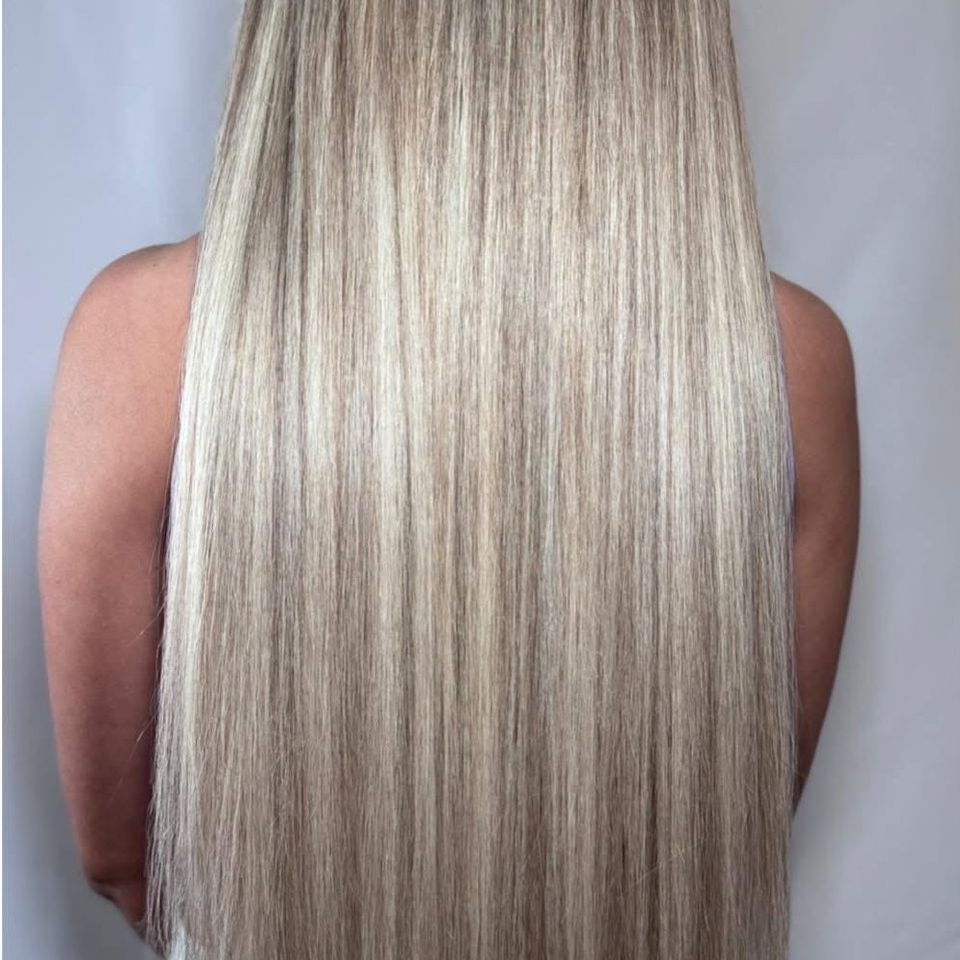
Fine hair is the most common reason extensions look obvious rather than natural. Here's what actually works - and what we'd never do for a fine-haired client.
Why fine hair is different
Fine hair has a smaller diameter per strand. It shows bonds and tape panels more easily, and heavy extensions can pull on the roots causing traction damage. Most 'extensions ruined my hair' stories start with fine hair and the wrong method.
What works
Keratin bonds (with caveats)
Small individual bonds are less visible on fine hair. But — and this matters — fewer bonds, not more. A common mistake is fitting 200 bonds to 'add volume' which actually weighs fine hair down. For fine hair, we fit 80–120 bonds strategically placed, never more.
Volume-only tape-ins
For pure volume (not length), a few tape panels placed at the back and sides can add fullness without showing. We avoid tape-ins on fine hair for length because the panels are visible from above.
20-inch hair maximum
Longer hair is heavier per strand. For fine hair, 18–20 inches is the practical maximum — anything longer is too heavy.
What doesn't work
200+ bond keratin fittings
Volume-focused bonding weighs fine hair down and causes traction damage at the roots.
Tape-ins for length
Panels show through fine hair, especially when hair is worn up or in a ponytail.
Clip-ins as a permanent solution
Daily clip-in use on fine hair causes breakage at the points where clips attach.
What we'd never do
We'd never fit extensions on fine hair that's already damaged or breaking. If your hair is breaking at the mid-lengths or thinning at the temples, extensions will make it worse. We'd refer you to a trichologist first.
Have a Question About Your Hair?
Book a free 15-minute consultation with Mădălina & Cornelia at our East London studio, or send us photos on WhatsApp for an immediate estimate.